Detailed, answer-focused guideA search phrase can be broad, while the underlying health concern may be quite specific; this guide keeps those two things separate. Sexual health consultation in Jhansa starts with defining the exact symptom, reviewing relevant medical and lifestyle factors, and deciding whether routine guidance, medical treatment, testing or specialist referral is appropriate.
A sexual health consultation in Jhansa should separate common concerns such as low desire, arousal changes, orgasm difficulty and pain, then check whether physical, medication, hormonal or stress-related contributors are present. A consultation should define the main concern instead of assuming that every sexual symptom has the same cause.
A responsible consultation therefore starts with the actual pattern rather than assuming that one product or one traditional formula fits everyone.
Hormonal or reproductive changes: Pregnancy, postpartum recovery, breastfeeding, perimenopause and menopause can change desire, lubrication and comfort. Medicines and general health: Some medicines and chronic health conditions can influence libido, arousal or orgasm and may need review. Stress, sleep and emotional strain: Poor sleep, chronic stress and major life changes can affect sexual interest and the ability to stay comfortable and engaged. Pelvic, urinary or gynaecological factors: Pain, infection, pelvic-floor issues and urinary or vaginal symptoms can affect comfort and may require clinical evaluation.
This page targets Jhansa search intent. Dr. Aman Clinic should be contacted to confirm the current consultation route, appointment availability and the appropriate physical clinic location. This page does not by itself represent a separate Jhansa branch. Before travelling, patients should confirm the consultation timing and the physical address rather than assuming that a location keyword means there is a separate branch.
Assessment for someone from Jhansa should cover the main symptom, onset, frequency, menstrual or menopausal context where relevant, pregnancy or postpartum changes, current medicines, chronic conditions, sleep, stress, relationship context and any pain, urinary or vaginal symptoms.
- Low or changed sexual desire: A persistent reduction in interest that is affecting wellbeing or a relationship and is not explained simply by a brief period of fatigue.
- Reduced arousal or lubrication: A person may still want intimacy but notice less physical response, dryness or difficulty maintaining comfortable arousal.
- Pain or discomfort: Pain during sexual activity is a clinical symptom and may need medical or gynaecological assessment rather than being treated as a performance issue.
- Orgasm difficulty: Ongoing difficulty reaching orgasm can have several contributors and is best discussed without assuming a single diagnosis.
Sensitive symptoms are easier to discuss when the patient knows what will happen during the consultation. A simple symptom timeline, medicine list and previous reports can make the conversation more efficient.
Begin with a confidential Jhansa history that separates desire, arousal, orgasm, pain and mixed symptoms. Review reproductive stage, medicines, chronic conditions, sleep, stress and relationship context instead of assuming the cause from the symptom name alone. When physical red flags are present, prioritise appropriate medical or gynaecological assessment and referral. Discuss counselling, lifestyle measures, medication review, medical treatment, specialist referral and individualized Ayurvedic support only when appropriate to the assessment. Use follow-up to measure whether the original symptom is changing and revise the plan when it is not.
- Define the main complaint: Clarify whether the problem is mainly desire, arousal, orgasm, pain or a combination.
- Map the timeline: Record when the change began, what happened before it and whether the pattern is constant or situation-specific.
- Review contributors: Consider medicines, reproductive stage, general health, sleep, stress and relationship context.
- Investigate when indicated: Pain, bleeding, discharge, fever or other physical symptoms can require examination, testing or referral.
- Set proportionate follow-up: Choose a care pathway that matches the likely contributors and reassess rather than promising instant results.
A realistic plan should explain what can be assessed now, what may need testing and when follow-up is useful.
An Ayurveda-focused approach is best presented with realistic expectations: supportive care may be useful for some people, but persistent or unexplained symptoms still deserve appropriate medical evaluation.
Patients should share current prescriptions, over-the-counter medicines, supplements, allergies and relevant medical history. Prescribed medicines should not be stopped or replaced solely because a website describes an Ayurvedic option.
The aim is not to create an unrealistic “perfect routine”. Small, sustainable changes are easier to maintain and give a clinician clearer feedback at follow-up.
Factors worth discussing
- •Persistent symptoms in Jhansa that cause meaningful personal or relationship distress
- •A recent reproductive, hormonal, medical or medication change
- •Ongoing sleep problems, stress or major emotional strain
- •Pain, dryness, discharge or urinary symptoms without a clear diagnosis
- •Using unverified sexual-health products instead of symptom-based evaluation
Common myths should not replace diagnosis. A symptom does not automatically prove a single cause, and no single product is guaranteed to work for every person.
A better question than “Which medicine is strongest?” is “What is the likely cause, what evidence supports this option for me, and what would make us change the plan?” That approach is safer for both short-term symptoms and longer-term conditions.
Persistent pelvic pain, unusual bleeding, fever, abnormal discharge, genital sores, sudden severe pain or another acute physical change should prompt appropriate medical or gynaecological evaluation rather than self-treatment.
Sudden severe pain, significant swelling, fever with genital symptoms, unexplained bleeding, major injury, new neurological symptoms or severe urinary problems are examples where prompt medical evaluation may be more appropriate than waiting for a routine appointment.
This page targets Jhansa search intent. Dr. Aman Clinic should be contacted to confirm the current consultation route, appointment availability and the appropriate physical clinic location. This page does not by itself represent a separate Jhansa branch.
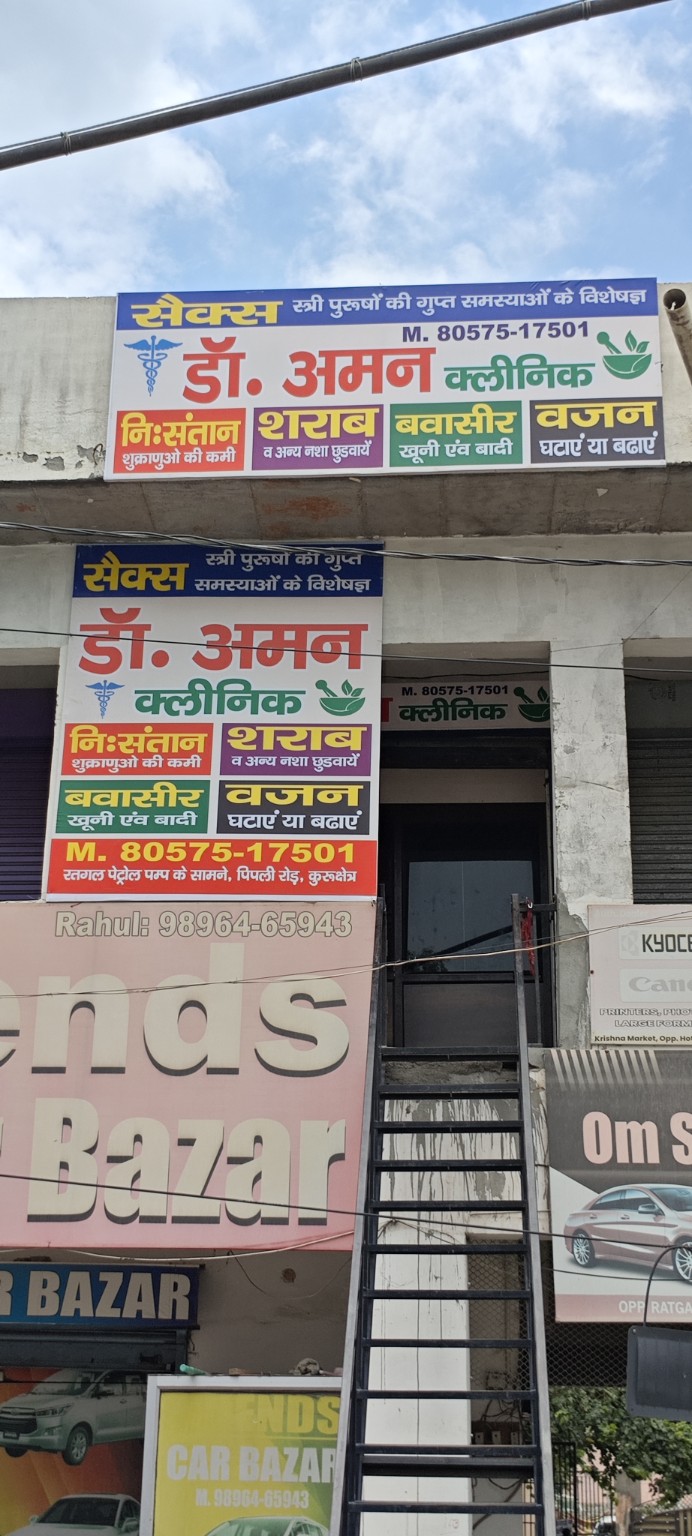
Kurukshetra clinicPipli Road, DD Colony, Kurukshetra, Haryana
Chandigarh clinicHimalaya Marg, Sector 22C, Sector 22, Chandigarh, Punjab 160022
In-person consultation is currently listed for Wednesday, 10:00 AM–6:00 PM. Online consultation is available, and home-delivery arrangements can be confirmed in advance. The listed 24/7 contact availability should not be interpreted as 24/7 physical clinic opening.