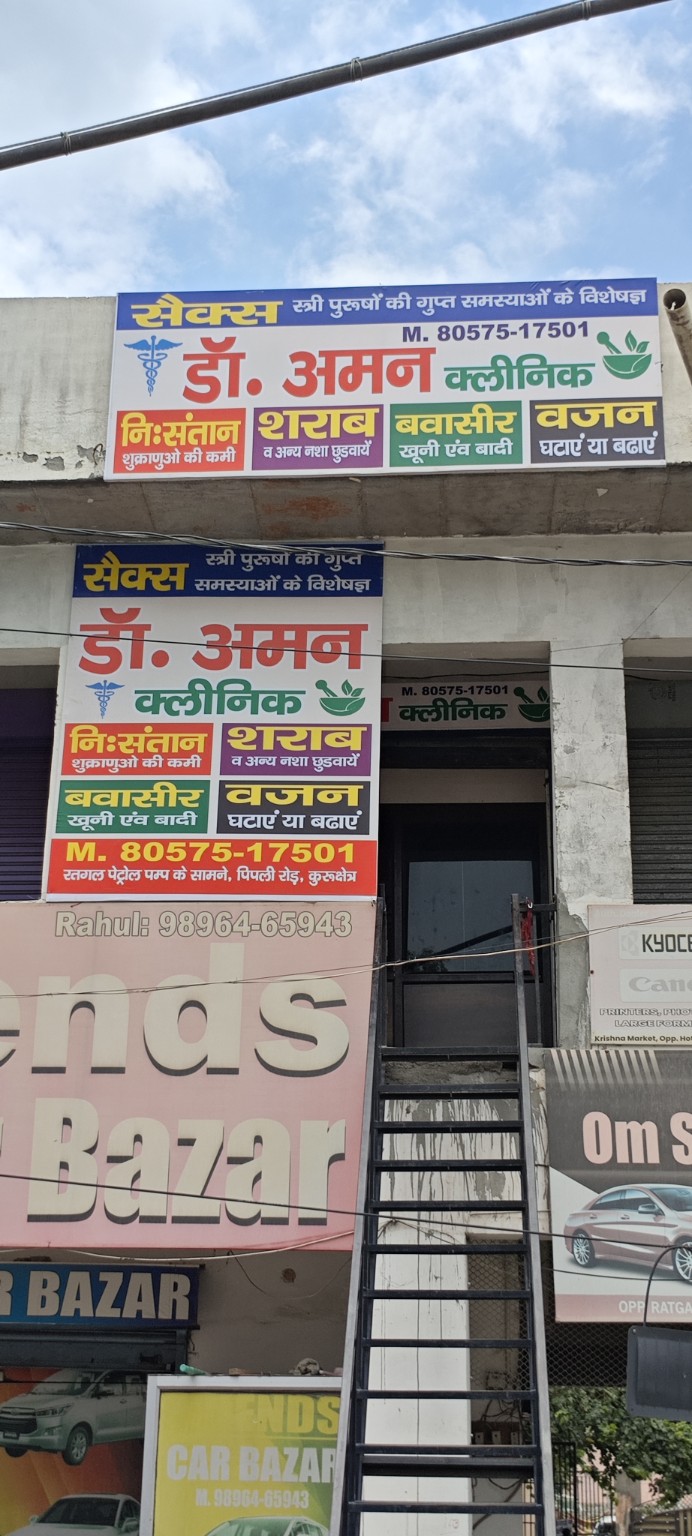
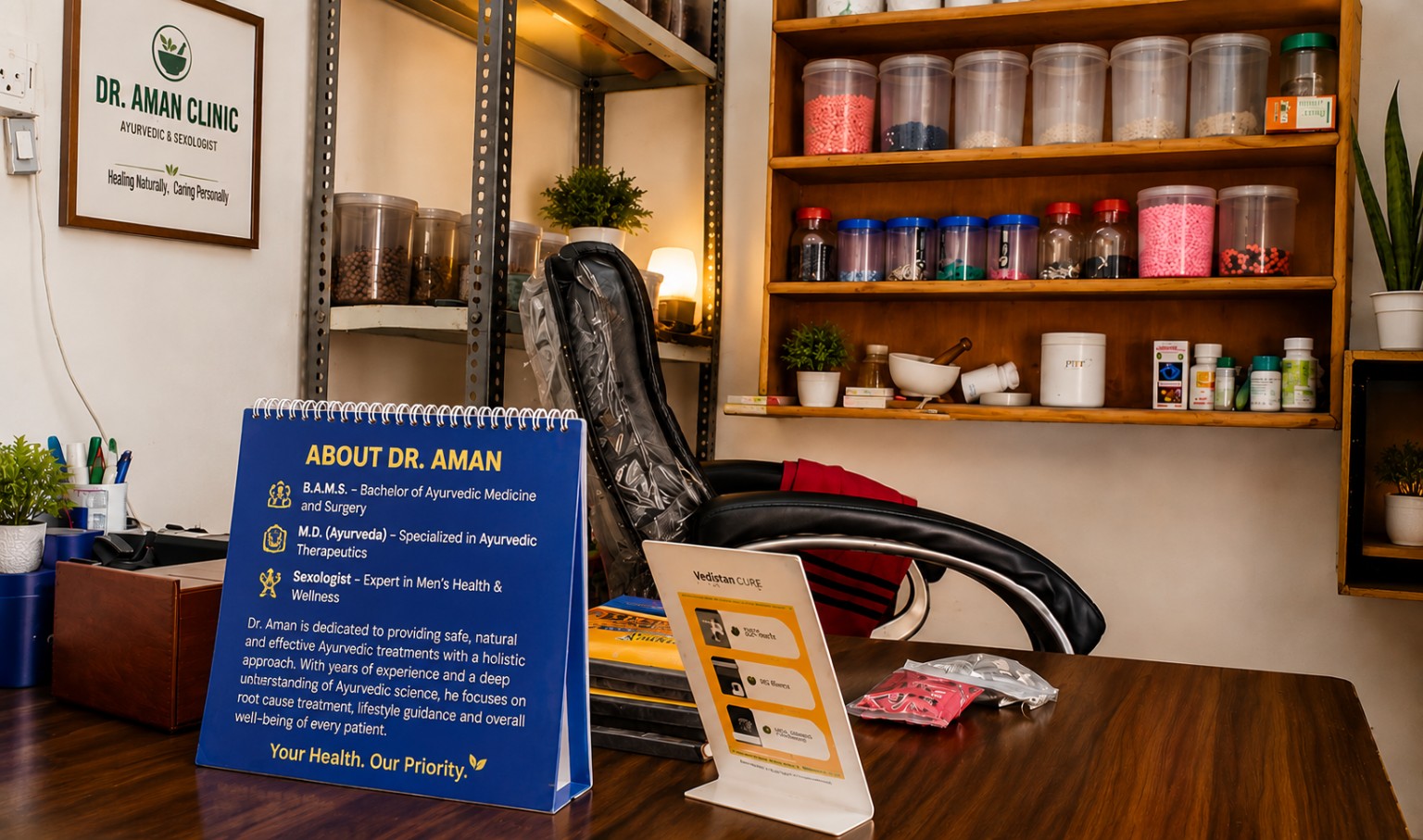
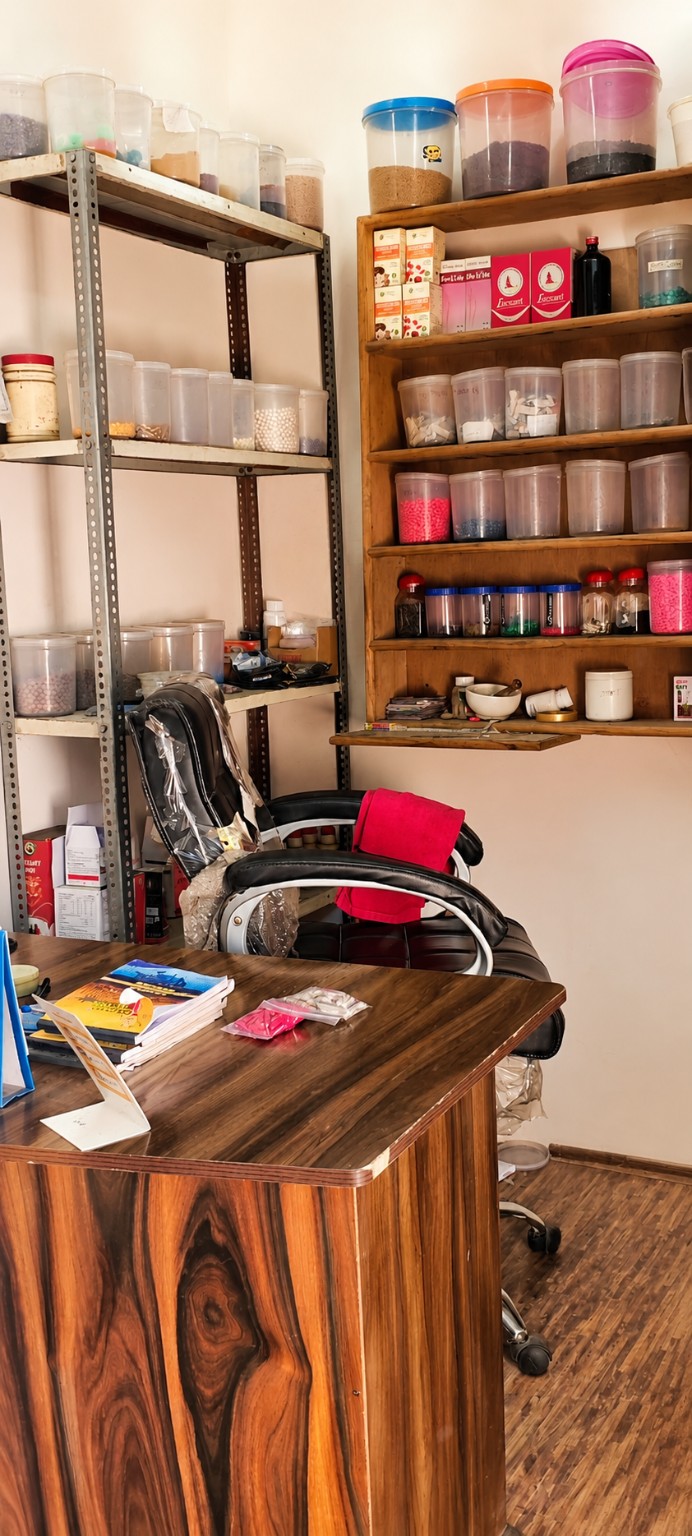
Low sexual desire treatment in Kurukshetra begins with identifying whether the drop in interest is generalized or situational, and reviewing hormones, stress and relationship context before planning individualized care for men and women alike. The clinic is at Pipli Road, DD Colony, Kurukshetra, Haryana. The best next step depends on the actual symptom pattern rather than the search phrase alone.
What Low Sexual Desire means in practical terms
Low sexual desire, sometimes described clinically as hypoactive sexual desire, means a persistent lack of interest in sexual activity that causes distress to the person or their relationship. It affects both men and women, and it is different from erectile dysfunction or arousal difficulty, though the three can overlap.
At our Kurukshetra centre, patients raise this concern in quite different ways: some notice they simply stopped thinking about sex the way they used to, others feel pressure because a partner wants more frequent intimacy than they do, and some are worried something is medically wrong. All three deserve a proper look rather than a single generic answer.
Because Kurukshetra serves as the main consultation point for the wider region — including Thanesar, Pipli, Karnal and beyond — this page is written to cover the evaluation in full detail for anyone travelling here specifically for this concern.
Why people in Kurukshetra search for low sexual desire
People searching for low sexual desire usually want a clear explanation of the symptom, what can contribute to it, how a consultation works and what realistic next steps look like.
For patients in Kurukshetra, a local consultation should make the physical clinic location, appointment timing and online options transparent so people can plan travel without confusing a service-area page with a second branch.
A useful local page should answer the practical questions that appear before the appointment: where the clinic is, how to contact the team, whether online consultation is available, whether home delivery can be discussed, and what information should be carried to the visit. Those details help a patient decide whether the service actually fits their needs instead of simply repeating the same keyword in different headings.
Understanding symptoms and patterns
The symptom pattern can be more informative than the label itself. In this condition, patients may describe Persistent lack of interest in sex, Reduced sexual thoughts or fantasies, Avoidance of intimacy, Relationship tension around mismatched desire, Guilt or self-doubt about the change, Situational variation. These experiences can appear alone or together, and the combination can change what a clinician needs to ask next.
During the consultation, it is useful to say whether the problem is new, longstanding, constant, intermittent or linked to a particular situation. A symptom that appears only in one setting may have a different set of contributors from a symptom that is present all day or every day.
For this reason, a strong Kurukshetra treatment page should not promise a single universal solution. It should show the patient what information changes the decision-making process and what details are worth documenting before treatment begins.
Possible contributors and related health factors
Depending on the specific condition, possible contributors mentioned in the clinical information for this page include Hormonal factors, Psychological factors, Medicines, Relationship dynamics, Chronic illness and fatigue, Life-stage changes. These are examples, not a diagnosis, and a person may have more than one contributor at the same time.
Current medicines matter. Patients should mention prescriptions, over-the-counter medicines, supplements and any products already tried. This is especially important when people assume that a herbal or Ayurvedic product cannot interact with another medicine simply because it is described as natural.
Recent changes can also be useful clues. A new symptom after illness, a medication change, major weight change, relationship stress, poor sleep or increased alcohol or tobacco use should be part of the history rather than left out because it seems unrelated.
How the consultation can be structured
A focused consultation starts with the main complaint and then expands into timing, frequency, triggers, associated symptoms, medical history and the patient’s goals. This is more useful than selecting a treatment package before the problem has been defined.
A thorough history covers onset, whether the drop is generalized or situational, relationship context, current medicines (particularly antidepressants and hormonal treatments), mood, sleep, and any thyroid or other chronic-illness history.
Previous reports can be helpful when they are relevant. Depending on the concern, the clinician may review blood tests, blood pressure, blood sugar, semen analysis, previous prescriptions, imaging or other records. Not every patient needs the same tests, and a test should have a clear reason for being requested.
Patients should also say what has already been tried and what happened. A treatment that made no difference, caused a side effect, was stopped because of cost, or only worked temporarily can change the practical next step.
Where an Ayurvedic approach can fit
Dr. Aman Clinic follows an Ayurveda-focused model for appropriate consultations. That does not mean every symptom should automatically be treated with an herbal preparation. The first task is to understand the concern and identify whether an Ayurvedic approach is suitable for that individual situation.
A responsible plan should take current medicines, allergies, pregnancy where relevant, chronic illnesses and the possibility of testing or referral into account. Patients should not stop a prescribed medicine because an online page says that an herbal alternative is safer.
When the concern is suitable for lifestyle or supportive care, practical changes can be discussed alongside the consultation. When the symptom has a clear warning sign or needs a specialist evaluation, the safer option is to arrange that assessment rather than delay it.
Lifestyle, sleep and daily habits
• Prioritise sleep and general rest, since fatigue is one of the most common quiet contributors to low desire.
• Where relationship tension is present, open communication — sometimes with guided counselling — often helps more than any single medicine.
• Review any current antidepressant, hormonal or blood-pressure medicine with the prescriber rather than assuming it is unrelated.
• Address chronic conditions like diabetes or thyroid dysfunction with regular monitoring.
• Reduce pressure around a fixed sexual 'schedule' or expectation, which can itself suppress spontaneous interest.
What to expect from treatment and follow-up
There is no honest single timeline that applies to every patient. A reasonable follow-up plan is usually based on the cause, the treatment chosen, the severity of the problem and whether the patient is following the agreed routine.
Progress should ideally be measured with the symptom that the patient actually wants to improve. For example, that might be erection reliability, control during intercourse, bowel comfort, number of episodes of pain, a laboratory parameter or the ability to complete normal daily activities.
If the initial approach does not help, that is a reason to reassess rather than simply increasing the number of products. The diagnosis may have been incomplete, the symptom may have more than one cause, or a different form of care may be needed.
Patients should also ask what the follow-up schedule is, what changes should be reported early, and which symptoms would require another clinician or an urgent assessment.
Common misunderstandings to avoid
A search term is not automatically a diagnosis. Persistent symptoms should be interpreted in context rather than matched to a generic product or a guaranteed-result claim.
Online testimonials are not a substitute for a clinical evaluation. A person with the same search query may have a completely different cause, age, medication history or health condition.
A “natural” label is not proof of safety, and a “power” product is not proof of efficacy. Patients should avoid unlabelled sexual-health or wellness products, particularly those that make guaranteed-result claims or hide ingredients.
A local search result is also not a clinical credential. When comparing providers, look for transparent qualifications, a real clinic address, a clear consultation process and appropriate advice about when testing or referral is needed.
Planning your Kurukshetra visit
The physical Dr. Aman Clinic address for Kurukshetra is Pipli Road, DD Colony, Kurukshetra, Haryana. The website also lists a Chandigarh location at Himalaya Marg, Sector 22C, Sector 22, Chandigarh, Punjab 160022; patients should confirm which location is appropriate before travelling.
In-person consultation timing listed for the Kurukshetra clinic is Wednesday, 10:00 AM–6:00 PM. Online consultation and appointment enquiries can be arranged outside the in-person window; this should not be read as a promise that the physical clinic is open 24 hours a day.
Home delivery can be discussed where service coverage allows. Confirm availability, timing and any practical requirements before placing an order.
For a first visit, carrying recent reports, a current medication list and a short timeline of the main symptom can save time. For sensitive concerns, patients can also decide in advance which questions they want to ask so that embarrassment does not prevent an accurate history.
A practical pre-appointment checklist
Before the appointment, write the main concern in one or two plain sentences. Include when it started, whether it is getting better or worse, how often it appears and what makes it better or worse. This is more useful than trying to remember every detail while sitting in the consultation.
Keep photographs, laboratory reports or prescriptions only when they are genuinely relevant. For fertility concerns, the original semen report is more useful than a remembered number. For skin problems, a timeline of changes can be helpful. For digestive or sexual symptoms, the timing of the symptom in relation to meals, sleep, stress or sexual activity may matter.
Make a complete list of current medicines, supplements and products bought online. Include the dose when known. This helps the clinician avoid recommending an approach that could conflict with an existing treatment or medical condition.
Finally, decide what a successful consultation would mean for you. The goal may be understanding the cause, knowing whether a test is needed, getting lifestyle guidance, discussing an Ayurveda-focused option or deciding that reassurance is enough. A clear goal makes follow-up easier to measure.
How to compare treatment options without getting misled
A responsible comparison should ask what problem the treatment is intended to address, what evidence or clinical reasoning supports it, what risks and interactions are possible, how follow-up will work and what happens if the first approach fails. A treatment page should be judged by the quality of those answers, not by how many times it repeats the word “best”.
Be cautious with claims that guarantee a result in a fixed number of days, promise that every patient needs the same medicine, or suggest that a product has no possible side effects. Medical problems vary because causes, age, health history and current medicines vary.
The same principle applies to online reviews. Reviews can describe a patient's experience, but they cannot prove that a treatment will work for a different person. Use reviews as one source of local reputation information and use the consultation process, qualifications and transparent clinic details to assess clinical fit.
When a symptom points toward another speciality, referral is not a failure. In fact, knowing when another clinician, test or procedure is appropriate is an important part of responsible healthcare.
Privacy, communication and sensitive questions
Sexual and reproductive symptoms are often delayed because patients feel embarrassed. The most useful consultation is one in which the person can describe the concern accurately without being shamed for normal questions or encouraged to hide information that changes the medical picture.
Use specific language when possible. Instead of only saying “weakness”, describe whether the problem is erection firmness, ejaculation control, sexual desire, pain, discharge, fertility or general fatigue. Specific language reduces the risk of treating a different problem than the one the patient actually has.
For online appointments, protect your own privacy by choosing a private room and avoiding public Wi-Fi where possible. Share reports only through the clinic's normal contact process and avoid posting sensitive medical documents on public social-media accounts.
A good consultation also leaves room for questions. Patients can ask what the suspected cause is, what is known versus uncertain, why a particular test is recommended, what side effects to watch for and when follow-up should occur.
Symptoms patients commonly describe
A sustained drop in the wish to initiate or respond to sexual activity, distinct from a temporary lull.
A noticeable decrease in spontaneous sexual thinking compared to the person's own past pattern.
Actively steering away from situations that could lead to sexual activity.
A partner may feel rejected or confused, adding strain that often goes unaddressed for years.
Many people quietly worry something is 'wrong' with them before seeking an evaluation.
Desire may be present alone or with fantasy but reduced specifically with a partner, which is a useful diagnostic clue.
Possible contributors
Low testosterone, thyroid dysfunction or other hormonal changes can reduce desire in both men and women.
Stress, anxiety, depression and unresolved relationship tension are among the most common contributors.
Certain antidepressants, blood-pressure medicines and hormonal treatments are recognised causes of reduced desire.
Unresolved conflict, poor communication or a genuine mismatch in desire levels between partners can suppress interest.
Diabetes, cardiovascular disease and ongoing tiredness can all reduce desire directly or through their treatment.
Pregnancy, postpartum recovery, menopause or andropause-related changes can all affect desire levels.
When not to delay medical assessment
Low desire appearing suddenly alongside significant weight change, menstrual irregularity, persistent low mood, or other new symptoms should be assessed by a doctor promptly rather than managed alone.