Low sexual desire has many possible causes, including stress, poor sleep, low mood, medicines, relationship strain and hormone problems. A consultation looks for the cause before suggesting treatment, and tests testosterone only when the history supports it. The clinic is at Pipli Road, DD Colony, Kurukshetra, Haryana. The best next step depends on the actual symptom pattern rather than the search phrase alone.
What Loss of Libido means in practical terms
Desire naturally changes through life and across weeks. It becomes a concern when the drop is persistent, causes distress or strains a relationship. Sexual desire sits on a base of physical health, mood, sleep and the quality of the relationship, so a fall in desire often signals something else that needs attention.
Common contributors are depression or anxiety, chronic stress, medicines such as some antidepressants and blood pressure drugs, heavy alcohol use, diabetes, thyroid problems and low testosterone. In some cases desire is intact but erection or ejaculation problems make sex unappealing.
Why people in Kurukshetra search for loss of libido
People searching for low sexual desire often want to know whether stress, sleep, medication, hormones, relationship context or another health issue could explain the change.
A local consultation in Kurukshetra can help identify whether the main issue is desire itself or whether desire has fallen because of pain, erection problems, anxiety, depression, exhaustion or relationship strain.
The clinic address, consultation timing and online option are listed further down this page so you can plan your visit before you travel.
Understanding symptoms and patterns
The symptom pattern can be more informative than the label itself. In this condition, patients may describe Reduced sexual interest, Less spontaneous desire, Reduced response to sexual cues, Associated fatigue or mood change. These experiences can appear alone or together, and the combination can change what a clinician needs to ask next.
During the consultation, it is useful to say whether the problem is new, longstanding, constant, intermittent or linked to a particular situation. A symptom that appears only in one setting may have a different set of contributors from a symptom that is present all day or every day.
Because the same symptom can have different causes, care is planned around your specific pattern instead of one standard remedy.
Possible contributors and related health factors
Depending on the specific condition, possible contributors mentioned in the clinical information for this page include Sleep and stress, Medicines and health conditions, Hormonal factors, Relationship and psychological context. These are examples, not a diagnosis, and a person may have more than one contributor at the same time.
Current medicines matter. Patients should mention prescriptions, over-the-counter medicines, supplements and any products already tried. This is especially important when people assume that a herbal or Ayurvedic product cannot interact with another medicine simply because it is described as natural.
Recent changes can also be useful clues. A new symptom after illness, a medication change, major weight change, relationship stress, poor sleep or increased alcohol or tobacco use should be part of the history rather than left out because it seems unrelated.
How the consultation can be structured
A focused consultation starts with the main complaint and then expands into timing, frequency, triggers, associated symptoms, medical history and the patient’s goals. This is more useful than selecting a treatment package before the problem has been defined.
The key is to identify what changed before and around the onset: sleep, stress, medicines, relationship context, mood, hormones or general health.
Previous reports can be helpful when they are relevant. Depending on the concern, the clinician may review blood tests, blood pressure, blood sugar, semen analysis, previous prescriptions, imaging or other records. Not every patient needs the same tests, and a test should have a clear reason for being requested.
Patients should also say what has already been tried and what happened. A treatment that made no difference, caused a side effect, was stopped because of cost, or only worked temporarily can change the practical next step.
How Loss of Libido is approached
The history separates a gradual drop from a sudden one and asks about mood, sleep, work stress, relationship issues and medicines.
Testosterone or thyroid tests may be considered when symptoms fit, usually a morning blood sample, repeated if borderline. Hormone products are not started without a test and a clear reason.
Care combines counselling, lifestyle changes and, where suitable, Ayurvedic support, with referral to a mental health or hormone specialist when needed.
Where an Ayurvedic approach can fit
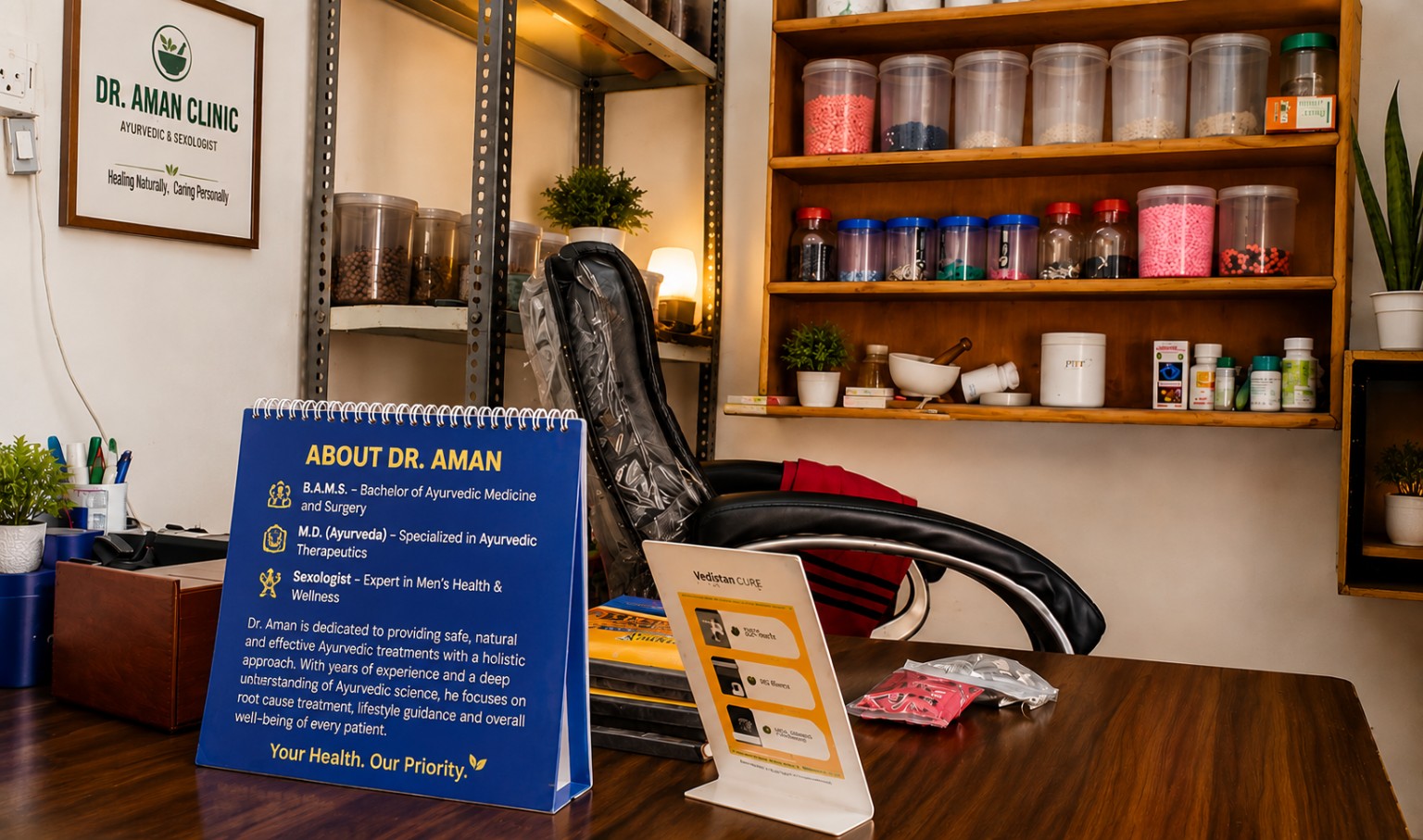
Dr. Aman Clinic follows an Ayurveda-focused model for appropriate consultations. That does not mean every symptom should automatically be treated with an herbal preparation. The first task is to understand the concern and identify whether an Ayurvedic approach is suitable for that individual situation.
A responsible plan should take current medicines, allergies, pregnancy where relevant, chronic illnesses and the possibility of testing or referral into account. Patients should not stop a prescribed medicine because an online page says that an herbal alternative is safer.
When the concern is suitable for lifestyle or supportive care, practical changes can be discussed alongside the consultation. When the symptom has a clear warning sign or needs a specialist evaluation, the safer option is to arrange that assessment rather than delay it.
Lifestyle, sleep and daily habits
• Prioritise sleep; chronic sleep loss is a leading and fixable cause of low desire.
• Exercise regularly; it improves mood, energy and testosterone balance.
• Moderate alcohol and avoid recreational drugs.
• Make time for non-sexual closeness with your partner to rebuild comfort.
• Review all current medicines with the prescriber if desire dropped after starting one.
What to expect from treatment and follow-up
There is no honest single timeline that applies to every patient. A reasonable follow-up plan is usually based on the cause, the treatment chosen, the severity of the problem and whether the patient is following the agreed routine.
Progress should ideally be measured with the symptom that the patient actually wants to improve. For example, that might be erection reliability, control during intercourse, bowel comfort, number of episodes of pain, a laboratory parameter or the ability to complete normal daily activities.
If the initial approach does not help, that is a reason to reassess rather than simply increasing the number of products. The diagnosis may have been incomplete, the symptom may have more than one cause, or a different form of care may be needed.
Patients should also ask what the follow-up schedule is, what changes should be reported early, and which symptoms would require another clinician or an urgent assessment.
Common misunderstandings to avoid
Low libido does not automatically mean low testosterone, and a person should not start hormone products solely because desire has changed.
Online testimonials are not a substitute for a clinical evaluation. A person with the same search query may have a completely different cause, age, medication history or health condition.
A “natural” label is not proof of safety, and a “power” product is not proof of efficacy. Patients should avoid unlabelled sexual-health or wellness products, particularly those that make guaranteed-result claims or hide ingredients.
When choosing any clinic, look for stated qualifications, a real address and a clear explanation of the consultation process.
Planning your Kurukshetra visit
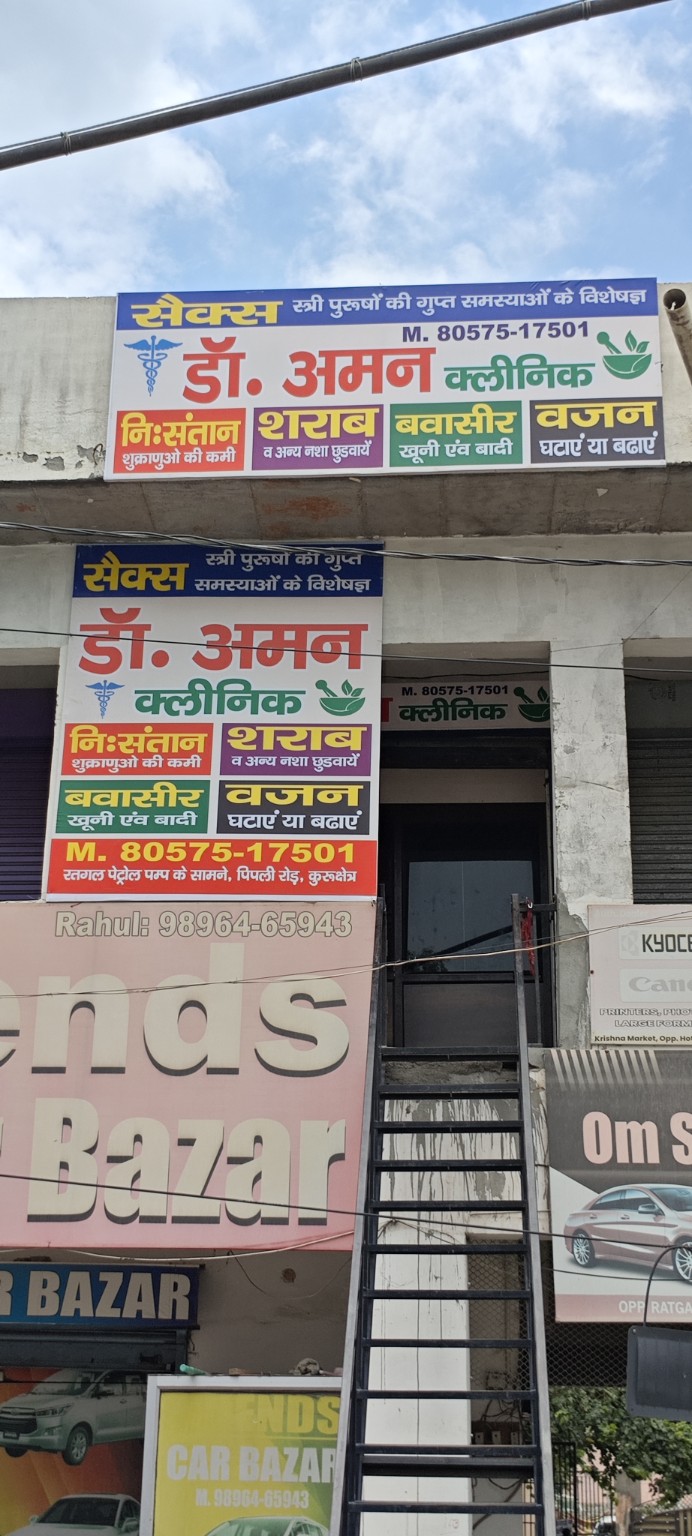
The physical Dr. Aman Clinic address for Kurukshetra is Pipli Road, DD Colony, Kurukshetra, Haryana. The website also lists a Chandigarh location at Himalaya Marg, Sector 22C, Sector 22, Chandigarh, Punjab 160022; patients should confirm which location is appropriate before travelling.
The Kurukshetra clinic is open 24/7, and so is the Chandigarh clinic. Call or WhatsApp before you travel so the doctor can plan your visit. Online consultation is also available.
Home delivery can be discussed where service coverage allows. Confirm availability, timing and any practical requirements before placing an order.
For a first visit, carrying recent reports, a current medication list and a short timeline of the main symptom can save time. For sensitive concerns, patients can also decide in advance which questions they want to ask so that embarrassment does not prevent an accurate history.
What to tell the doctor about Loss of Libido
Useful details include when desire changed, whether the change is gradual or sudden, sleep quality, mood, medicines, alcohol or tobacco, relationship context and whether erections or orgasm have changed too.
Bring a list of current medicines and supplements (with doses if you know them), any relevant reports, and a short note of what you have already tried and what happened.
Privacy and sensitive questions
Sexual and reproductive symptoms are often delayed because of embarrassment. Use specific words where you can, for example firmness, ejaculation control, desire, pain, discharge or fertility, so the right problem is assessed.
For online appointments, choose a private room and share reports only through the clinic's normal contact process. Ask what is known and what is uncertain, why a test is recommended and when follow-up should happen.
Symptoms patients commonly describe
Sexual thoughts or desire may occur less often than before.
A person may notice fewer spontaneous sexual thoughts or urges.
Arousal may feel less automatic even when the relationship is comfortable.
Low energy, poor sleep or low mood can accompany reduced desire.
Possible contributors
Chronic stress, sleep deprivation and burnout can reduce sexual interest.
Some medicines and chronic conditions can affect libido.
Hormonal changes may contribute in some people and need assessment when clinically indicated.
Anxiety, depression, conflict or changes in relationship circumstances can affect desire.
When not to delay medical assessment
A sudden major loss of desire accompanied by severe depression, neurological symptoms, unexplained weight change or other new health concerns should prompt broader medical evaluation.
Frequently Asked Questions
Related concerns
Breaking the worry cycle that affects erections and timing.
Difficulty getting or keeping an erection: causes, checks and care.
Finishing sooner than you want: control, anxiety and options.
Difficulty reaching climax: medicines, nerves and stimulation factors.
Nocturnal emissions: what is normal and when to get checked.
Semen-loss worries, cloudy urine and fatigue: separating myth from cause.
Loss of Libido: consult from your city
The clinics are in Kurukshetra and Chandigarh and are open 24/7. Pick your city to see the distance, the route and how a first consultation works for patients coming from there. Online consultation is available too.