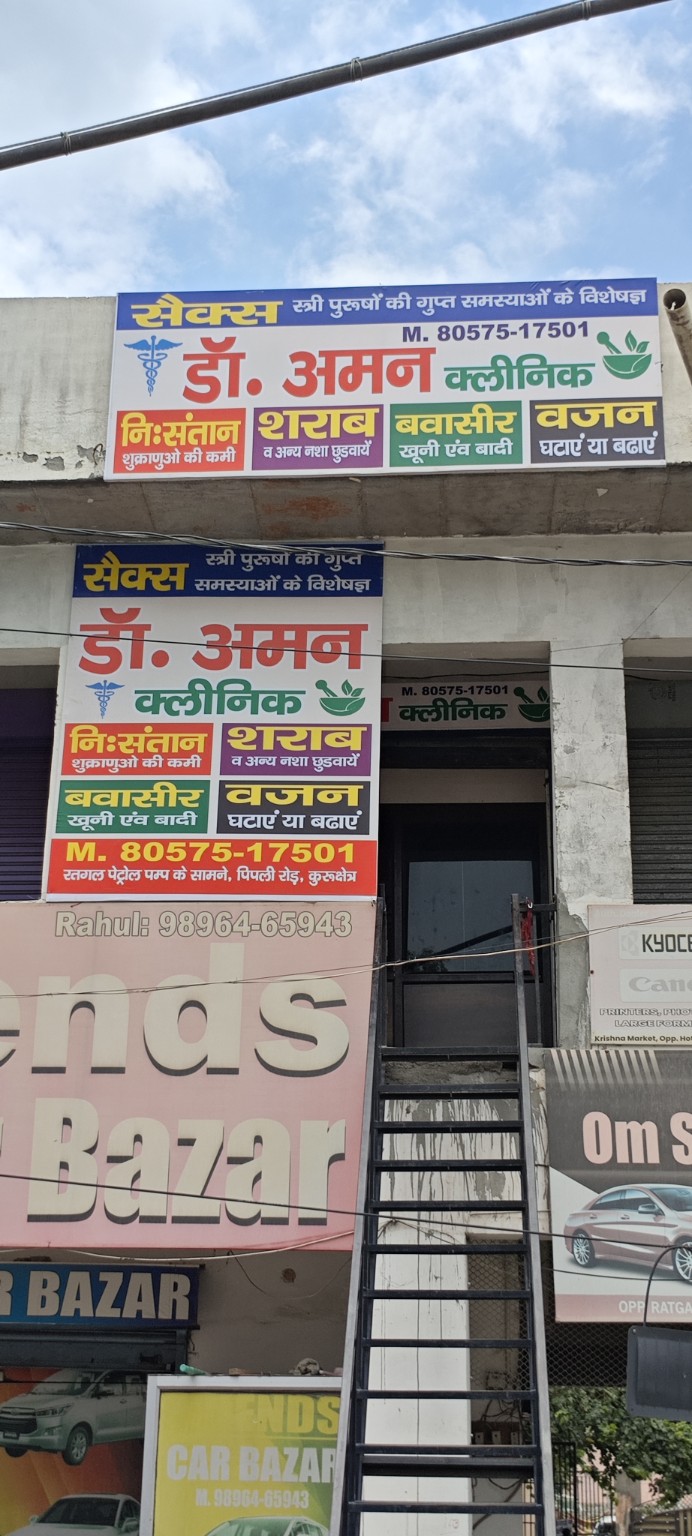
Pipli Road, DD Colony, Kurukshetra, Haryana
Wednesday in-person timing is listed as 10:00 AM–6:00 PM; confirm the appointment before travelling.
Himalaya Marg, Sector 22C, Sector 22, Chandigarh, Punjab 160022
Online consultation is also available for appropriate cases.
- What it is: Premature ejaculation (PE) describes ejaculation that happens sooner than desired and is recurrent enough to cause personal distress or relationship difficulty. Timing alone is not the whole definition; control, consistency, context and how the person experiences the problem matter.
- Common contributors: Possible contributors include performance anxiety, high arousal, learned sexual patterns, relationship stress, erectile difficulty, medication or substance effects and other individual factors. Physical and psychological contributors can overlap, so the consultation should not force everything into one explanation.
- When testing helps: Routine laboratory testing is not automatically required for every PE presentation. Tests or additional assessment are considered when the history suggests another condition or when associated symptoms make them relevant. The absence of a test does not mean the consultation was incomplete.
- Warning signs (seek prompt care): Pain, bleeding, genital sores, discharge, burning urination, fever or significant penile or testicular symptoms should be assessed for possible causes outside a straightforward timing concern.
- Realistic expectations: Improvement can take time because behaviour, anxiety and sexual routines may need to change together. A useful plan defines what “better” means for the patient—more control, less distress, better confidence or improved couple satisfaction—rather than promising a universal stopwatch result.
- Where to consult in Haryana: Kurukshetra (Pipli Road, DD Colony) and Chandigarh (Himalaya Marg, Sector 22C), plus online consultation.
What does premature ejaculation treatment in Haryana involve?
Premature ejaculation (PE) describes ejaculation that happens sooner than desired and is recurrent enough to cause personal distress or relationship difficulty. Timing alone is not the whole definition; control, consistency, context and how the person experiences the problem matter. Management may include education about arousal, behavioural strategies, treatment of coexisting erection problems, attention to anxiety and other appropriate options. The plan should be individualized and should not rely on exaggerated promises about achieving a particular duration.
The exact way the symptom appears matters. Some people have had the pattern since the beginning of sexual activity, while others notice a later change. PE can coexist with erection difficulty, anxiety, relationship stress or other sexual concerns. Asking about control and distress is more informative than focusing on a single stopwatch number. When comparing clinics that all claim to be the “best sexologist in Haryana,” look past the adjective and check five concrete things: the clinician’s actual stated qualification (for Dr. Aman, that is B.A.M.S., B.Sc. and B.N.Y.S.); the clarity of the consultation process, including whether it asks about your specific symptom and its timeline rather than offering the same product to every patient; whether relevant reports and previous prescriptions are actually reviewed; how privacy is handled during a sensitive conversation; and whether the page explains limitations as well as potential benefits rather than promising a guaranteed, fixed-day cure. A high review count or a bold headline can be useful context, but neither should replace this kind of clinical transparency, and a clinic that will not state its real address or the clinician’s real qualification is a warning sign worth taking seriously.
Possible contributors
Possible contributors are often more varied than online advertisements suggest. Possible contributors include performance anxiety, high arousal, learned sexual patterns, relationship stress, erectile difficulty, medication or substance effects and other individual factors. Physical and psychological contributors can overlap, so the consultation should not force everything into one explanation. A good consultation keeps several plausible explanations open until the history points toward a clearer one.
What a useful history looks like
A useful clinical history begins with the timeline. Useful questions include whether the pattern is lifelong or acquired, how consistent it is, how much control is experienced, whether erections are reliable and whether there is pain, urinary burning or another symptom. This creates a clearer clinical picture than the label “timing problem” alone. Before the appointment, note when the problem started, whether it is consistent or situational, any medicines or supplements currently in use, major health conditions and what outcome you actually want from a “best sexologist in Haryana” search — reassurance, a specific diagnosis, fertility guidance or a structured treatment plan are different goals and can change what “best” should mean for your situation. A short factual timeline, even three or four lines in Hindi, English or Hinglish, is more useful going into the consultation than trying to memorise every detail or arrive with a self-diagnosis already decided.
Practical point: The useful decision is to match the next step to the symptom and the available evidence, not to the strongest promise on an advertisement.
Clinical assessment
Assessment should be proportionate to the problem. Assessment focuses on the pattern rather than judging performance. A clinician can review onset, frequency, perceived control, distress, erection quality, sexual context and previous attempts to improve the problem. The aim is to choose a plan that matches the actual complaint. The goal is not to order every possible investigation but to ask the questions that can change what happens next.
When testing may help
Testing has a role when it can clarify cause, severity or management. Routine laboratory testing is not automatically required for every PE presentation. Tests or additional assessment are considered when the history suggests another condition or when associated symptoms make them relevant. The absence of a test does not mean the consultation was incomplete. Existing reports should be reviewed in context instead of interpreted from a single headline value.
Treatment planning
Treatment planning should match the condition rather than the keyword used in a search. Management may include education about arousal, behavioural strategies, treatment of coexisting erection problems, attention to anxiety and other appropriate options. The plan should be individualized and should not rely on exaggerated promises about achieving a particular duration. If another specialty is more appropriate, recognizing that early is part of responsible care.
Practical point: The useful decision is to match the next step to the symptom and the available evidence, not to the strongest promise on an advertisement.
Ayurveda-focused care and safety
For people who prefer traditional care, Ayurveda can be discussed without abandoning safety. An Ayurveda-focused plan can be considered for patients who prefer traditional care, but it should be clear what symptom is being targeted and how safety is being reviewed. A delayed-ejaculation product or herbal formula should not be treated as universally appropriate for every person. The phrase “natural treatment” should never be treated as a guarantee that a product is risk-free.
Medicines, supplements and interactions
Medicines and supplements deserve an honest review. Current medicines and supplements should be disclosed. Some substances can influence sexual function, arousal or ejaculation, while self-directed combinations may introduce interactions or side effects. Never stop a prescribed medicine simply because an online article suggests that it could affect sexual performance. Patients should keep the names and doses of everything they are taking available during consultation.
Lifestyle and everyday health
Everyday health can support the broader treatment plan. Adequate sleep, regular physical activity, reduced stress and a less pressured sexual routine can support sexual wellbeing. These measures are not a guaranteed cure, but they can remove some factors that amplify arousal and performance anxiety. The purpose is to improve useful health foundations, not to promise that exercise or diet alone will solve a specific disorder.
Stress, confidence and mental wellbeing
Emotional factors deserve attention without becoming a catch-all explanation. PE can create a cycle: worry about finishing early can increase arousal and self-monitoring, which can then make control harder. That does not mean the problem is imaginary. Addressing anxiety alongside the sexual symptom can make the overall plan more realistic and less self-blaming. A patient can have physical contributors and psychological pressure at the same time.
Practical point: The useful decision is to match the next step to the symptom and the available evidence, not to the strongest promise on an advertisement.
Partner and relationship context
Relationship context can change how a symptom is experienced and communicated. A partner conversation can be useful when both people feel comfortable. It can reduce the sense that intercourse is an exam and shift attention toward mutual pleasure, communication and gradual progress rather than a single performance target. Where both partners are comfortable, supportive communication can reduce pressure and improve clarity.
Myths and misleading claims
Patients encounter a large amount of fear-based sexual-health content online. PE is not proof of weakness, low sperm count or lack of masculinity. It is also not necessarily fixed forever. Another common mistake is to promise that a numbing product or one herbal formula will solve every case. The right approach depends on the individual pattern. Strong language, exaggerated before-and-after claims and guaranteed outcomes are not substitutes for a clinical explanation.
When another medical evaluation matters
Warning signs should change the plan. Pain, bleeding, genital sores, discharge, burning urination, fever or significant penile or testicular symptoms should be assessed for possible causes outside a straightforward timing concern. Persistent or unusual symptoms should not be managed only through a marketing article.
Realistic treatment expectations
Realistic expectations are part of good treatment planning. Improvement can take time because behaviour, anxiety and sexual routines may need to change together. A useful plan defines what “better” means for the patient—more control, less distress, better confidence or improved couple satisfaction—rather than promising a universal stopwatch result. A fixed number of days or a permanent-result promise should be treated cautiously because response varies between people.
Follow-up and reassessment
Follow-up is where a treatment plan proves whether it is actually useful. Follow-up is a chance to review what changed, which strategies were practical, whether anxiety has reduced and whether another issue such as ED has become more apparent. The plan should be adjusted according to response rather than repeated automatically. If the initial explanation no longer fits, reassessment is better than repeating the same intervention indefinitely.
Practical point: The useful decision is to match the next step to the symptom and the available evidence, not to the strongest promise on an advertisement.
Fertility: what this condition does and does not tell you
This condition also needs to be separated from fertility questions where relevant. PE does not automatically mean infertility. Fertility is primarily about reproductive factors, including sperm and the ability to achieve pregnancy. If pregnancy is difficult, that deserves a separate fertility assessment rather than assuming ejaculation timing explains everything. Keeping sexual performance and reproductive biology distinct prevents unnecessary fear and helps direct testing appropriately.
Online consultation: when it helps
Online care can be useful for some stages of the process. Online consultation can work well for history-taking and education around PE because much of the assessment is conversational. If unusual physical symptoms, pain or another condition is suspected, in-person evaluation may still be needed. Remote consultation should not be used to avoid direct examination when the symptoms make examination necessary.
Privacy and respectful consultation
Privacy matters because patients often delay care when they expect judgement. Many people delay seeking care because they fear judgement. A confidential consultation should normalise the discussion and let the patient describe the exact pattern without using exaggerated numbers or hiding symptoms out of embarrassment. A confidential consultation should make it easier to describe the real symptom rather than the version that feels least embarrassing.
What to prepare before the appointment
Good preparation can make the first consultation more efficient. Before the visit, note whether the issue is lifelong or recent, how often it occurs, whether erections are reliable, what situations make it better or worse and what you have already tried. Partner feedback can be useful if the patient is comfortable sharing it. Before the appointment, note when the problem started, whether it is consistent or situational, any medicines or supplements currently in use, major health conditions and what outcome you actually want from a “best sexologist in Haryana” search — reassurance, a specific diagnosis, fertility guidance or a structured treatment plan are different goals and can change what “best” should mean for your situation. A short factual timeline, even three or four lines in Hindi, English or Hinglish, is more useful going into the consultation than trying to memorise every detail or arrive with a self-diagnosis already decided.
What a trustworthy clinic page should tell you
A trustworthy clinic page should make its own limits visible. A strong PE page does not make intercourse duration the only measure of health. It explains the condition, separates myths from clinical questions, recognises associated symptoms and provides a realistic path toward assessment and follow-up. It should also identify who is providing care, where the clinic is located and how patients can arrange follow-up.
Practical point: The useful decision is to match the next step to the symptom and the available evidence, not to the strongest promise on an advertisement.
Choosing the next step
The practical decision is usually smaller than the internet makes it seem. The best next step is usually not another random timing product. It is a structured discussion of control, distress, arousal, erection quality, context and previous attempts, followed by a plan that can be reviewed over time. A responsible answer to “who is the best sexologist in Haryana” should leave the patient with a clearer, checkable standard — not a louder marketing claim and not a stronger fear. If symptoms are persistent, unusual, painful or associated with other medical problems, direct clinical evaluation with a clinician whose qualifications and clinic location you have verified is more useful than continuing to compare unverifiable “number one” claims across different websites.
Key takeaways at a glance
For Haryana-wide patients, location changes access—not the underlying medical definition of the condition. Common search locations for this exact query include Kurukshetra, Thanesar, Karnal, Kaithal, Ambala, Panipat, Yamunanagar, Panchkula, Sonipat, Hisar, Rohtak, Sirsa, Bhiwani, Jind, Faridabad and Gurugram. These location terms describe where a patient is searching from; they do not change the underlying medical condition, the qualification of the clinician, or what actually counts as good, symptom-specific care regardless of which Haryana district the search originates in. The page therefore keeps the clinical information stable while making the real clinic options explicit.
Glossary: terms used on this page
People often compare options from more than one district before booking, and “best sexologist in Haryana” searches arrive from every part of the state — Karnal, Kaithal, Panipat, Ambala, Yamunanagar, Panchkula, Sonipat, Hisar, Rohtak, Sirsa, Bhiwani, Jind, Faridabad and Gurugram among them. Someone travelling from Karnal may have different timing constraints from a patient already in Kurukshetra, while a person near Panchkula, Ambala or Yamunanagar may find the Chandigarh clinic more convenient. A patient from Hisar, Sirsa or Bhiwani is typically further from both physical branches and may prefer to start with an online consultation to establish the history before deciding whether an in-person visit is worth the travel. The page therefore treats location as an access issue, not as proof of clinical quality — the same assessment standard applies regardless of which district a patient is searching from. For a person travelling between districts, the useful preparation is simple: confirm the appointment, keep reports ready, carry the medicine list and allow enough time for a private consultation rather than rushing through it.
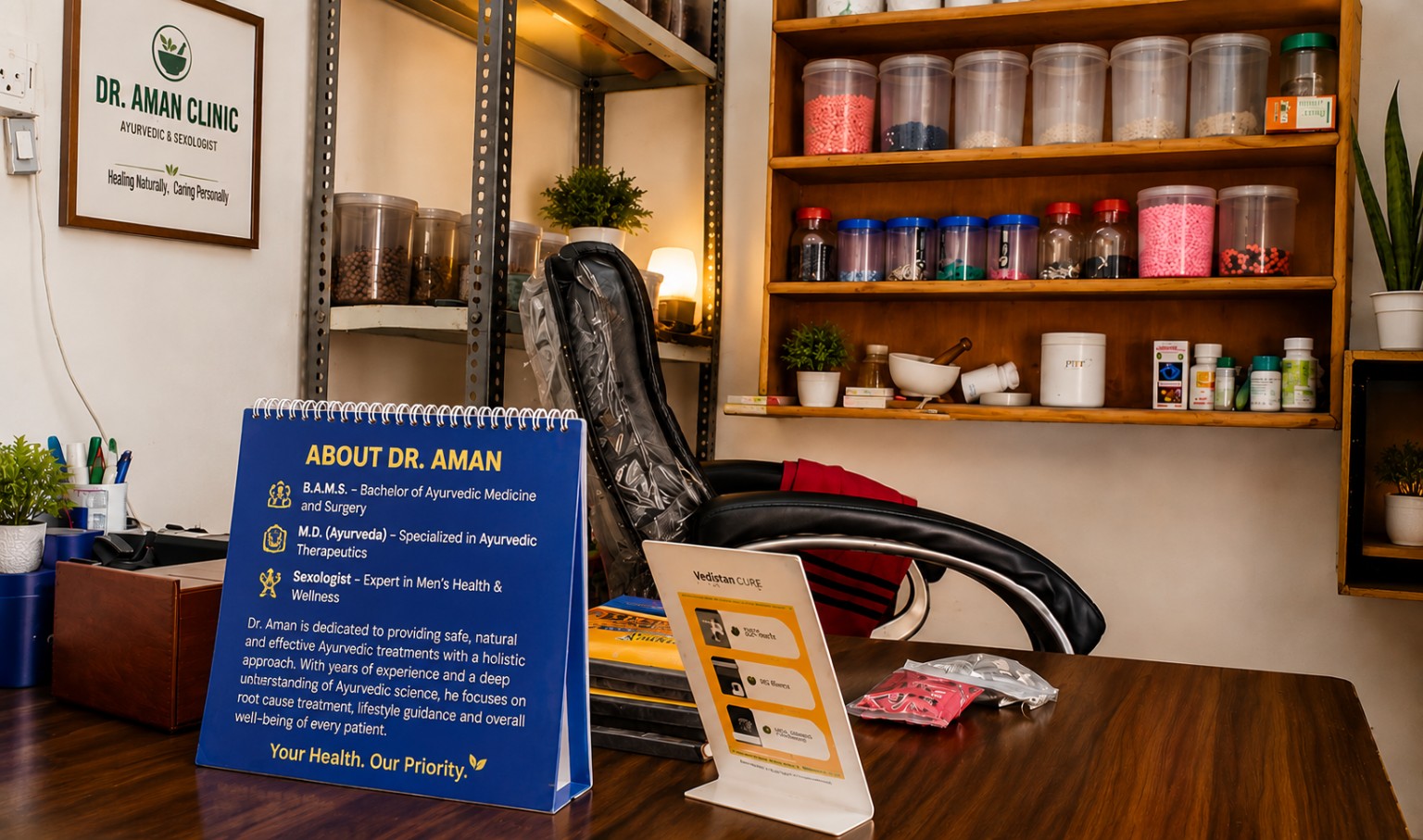
Dr. Aman Clinic’s approach in Haryana
Patients can choose the branch that is practical for them after confirming appointment details rather than assuming the nearest search result is automatically the nearest clinic. The Kurukshetra clinic is on Pipli Road in DD Colony, and the Chandigarh clinic is on Himalaya Marg in Sector 22C, Sector 22. Both addresses are published here specifically so a patient comparing “best sexologist in Haryana” claims can verify that a real, visitable clinic exists behind the listing rather than only a service-area page with no fixed location. Online consultation is also available for appropriate cases, while home-delivery requests should be discussed through the clinic rather than assumed to be suitable for every product or patient.
Further guidance
For in-person visits, Wednesday availability is listed as 10:00 AM to 6:00 PM; people should confirm the current appointment schedule before travelling. The clinic may be contactable outside the in-person window for enquiries, but that should not be interpreted as a promise that the physical consultation room is open continuously.
Further guidance
Kurukshetra clinic: Pipli Road, DD Colony, Kurukshetra, Haryana. Chandigarh clinic: Himalaya Marg, Sector 22C, Sector 22, Chandigarh, Punjab 160022. Listing both addresses on a Haryana-wide page helps patients understand the actual physical locations instead of assuming that every Haryana city has a separate branch.
Practical point: The useful decision is to match the next step to the symptom and the available evidence, not to the strongest promise on an advertisement.
Further guidance
A good local treatment page also avoids turning every nearby town into a separate medical claim. The city name is useful for discovery and travel planning, but it does not prove that a different clinic exists there. The accurate branch information remains the strongest local detail.
Further guidance
If a previous treatment did not help, bring the name, duration and result instead of simply starting another product. A failed treatment can mean the original diagnosis was incomplete, the intervention was not suitable, adherence was difficult or a different underlying contributor deserves attention.
Further guidance
Patients should also ask what would make the clinician change course. That question is important because treatment is not a one-time transaction. A clear plan should say what improvement will be watched, what side effects matter and what happens if the expected response does not occur.
Further guidance
Another useful question is whether a referral could become necessary. Responsible clinicians should be comfortable explaining when another medical specialty, laboratory, imaging study, counselling support or urgent assessment would add value.
Further guidance
For people comparing “best” providers, the strongest long-term signal is not how many times the word “best” appears on a page. It is whether the information is specific, medically responsible, transparent about limits and connected to a real clinic that patients can verify.
Further guidance
This page is educational and should support—not replace—individual medical assessment. Persistent, severe, unusual or distressing symptoms deserve direct professional review. When the clinical picture is unclear, uncertainty should lead to better assessment rather than a more confident marketing claim.
Further guidance
In short, the practical takeaways for premature ejaculation in Haryana are: describe the exact symptom and its timeline rather than a general label; disclose current medicines, supplements and health conditions before starting anything new; treat testing as a tool that should answer a specific question rather than a routine formality; keep an Ayurveda-focused option realistic rather than treating “natural” as a synonym for “risk-free”; and use follow-up to check whether the original explanation still fits, adjusting the plan if it does not.
Further guidance
A few terms come up often in this conversation and are worth defining plainly. “Assessment” means a structured review of history, and sometimes examination or testing, used to identify a likely cause. “Ayurveda-focused” means the plan draws on traditional formulations and lifestyle principles while still accounting for current medicines, allergies and safety. “Red flag” refers to a symptom — such as sudden severe pain, heavy bleeding, fever with genital symptoms or significant swelling — that should prompt prompt medical attention rather than routine treatment. “Follow-up” is the review appointment where progress, side effects and next steps are discussed.
Further guidance
Dr. Aman Clinic’s approach to premature ejaculation in Haryana is built around these principles: a symptom-specific conversation instead of a one-size-fits-all label, transparency about what an Ayurveda-focused plan can and cannot promise, clear disclosure of the two physical clinic locations, and a follow-up structure so the plan can be adjusted if the first approach does not work as expected. Patients are encouraged to ask questions during the consultation, request clarification about any recommendation and raise new or changing symptoms promptly rather than waiting for the next scheduled visit.
Frequently Asked Questions
What counts as premature ejaculation?
There is no single stopwatch number that explains every case. Clinicians consider how quickly ejaculation occurs, the degree of control, how consistently it happens and whether it causes meaningful distress.
Is PE a sign of infertility?
No. Ejaculation timing and sperm production are different issues. A person can have PE with otherwise normal fertility, or have fertility problems without PE.
Can anxiety cause early ejaculation?
Performance anxiety and heightened attention to sexual performance can contribute, especially when worry becomes a repeated cycle. Other contributors can also coexist, so persistent symptoms deserve proper assessment.
Are tests always required?
No. Many PE consultations start with a detailed sexual and medical history. Additional tests are considered when another condition or associated symptom makes them relevant.
Can Ayurveda be used?
An Ayurveda-focused approach can be discussed if appropriate, with attention to medicines, supplements, allergies and the individual symptom pattern. “Natural” should not be treated as a guarantee of safety.
Can PE improve without medication?
Some patients benefit from education, behavioural strategies, communication and addressing associated problems such as anxiety or ED. The right plan depends on the pattern and the patient’s goals.
Does a partner need to attend?
Not necessarily. A private individual consultation is reasonable, while partner involvement can be useful later when both people are comfortable with it.
When should I seek another medical assessment?
Pain, discharge, sores, bleeding, fever, urinary symptoms or significant genital changes deserve assessment beyond a routine ejaculation-timing discussion.
Is premature ejaculation the same for every man?
No. The pattern, timing, degree of control and level of distress vary between individuals, which is why a single fixed definition or duration target is not clinically useful on its own.
Can PE happen alongside erectile dysfunction?
Yes, the two can occur together. When both are present, addressing the erection concern is often part of a coordinated plan rather than treating each issue in isolation.
Do home remedies or delay sprays work for everyone?
Response varies between individuals, and products are not universally suitable. Any product, including sprays or creams, should be discussed with a clinician alongside current medicines and skin sensitivity.
How soon can I expect to notice a difference?
There is no single honest timeline that applies to every patient. Progress is usually reviewed at follow-up rather than promised in advance for a fixed number of sessions.
Who is the best sexologist in Haryana for premature ejaculation?
No government body or medical council issues an official “best sexologist in Haryana” ranking, so the term is subjective. Judged on transparent qualifications, symptom-specific consultation and verifiable clinic addresses, Dr. Aman — B.A.M.S., B.Sc., B.N.Y.S. — at Dr. Aman Clinic is a widely searched option for premature ejaculation in Haryana, with in-person clinics in Kurukshetra and Chandigarh and online consultation for patients across the state. Patients should still verify qualifications and compare providers for themselves.
Is Dr. Aman qualified to advise on premature ejaculation?
Dr. Aman holds B.A.M.S., B.Sc. and B.N.Y.S. qualifications and provides Ayurveda-focused sexual-health consultation, including for premature ejaculation, alongside appropriate conventional assessment or referral where the history suggests it is needed.
Clinic information for Haryana patients
Dr. Aman Clinic lists the following physical locations for patients who want an in-person consultation:
- Kurukshetra: Pipli Road, DD Colony, Kurukshetra, Haryana
- Chandigarh: Himalaya Marg, Sector 22C, Sector 22, Chandigarh, Punjab 160022
The clinic provides online consultation for appropriate cases and can discuss home-delivery requests where applicable. Physical clinic timing and availability should be confirmed before travel.
Medical disclaimer: This page is educational and does not replace diagnosis or treatment from a qualified healthcare professional. Seek prompt medical care for severe, sudden or unusual symptoms.
Approximate content length: 3,395 words including FAQs; navigation and boilerplate excluded.